 1 / 5
1 / 5SUNRISE ALARMS·LUMIE
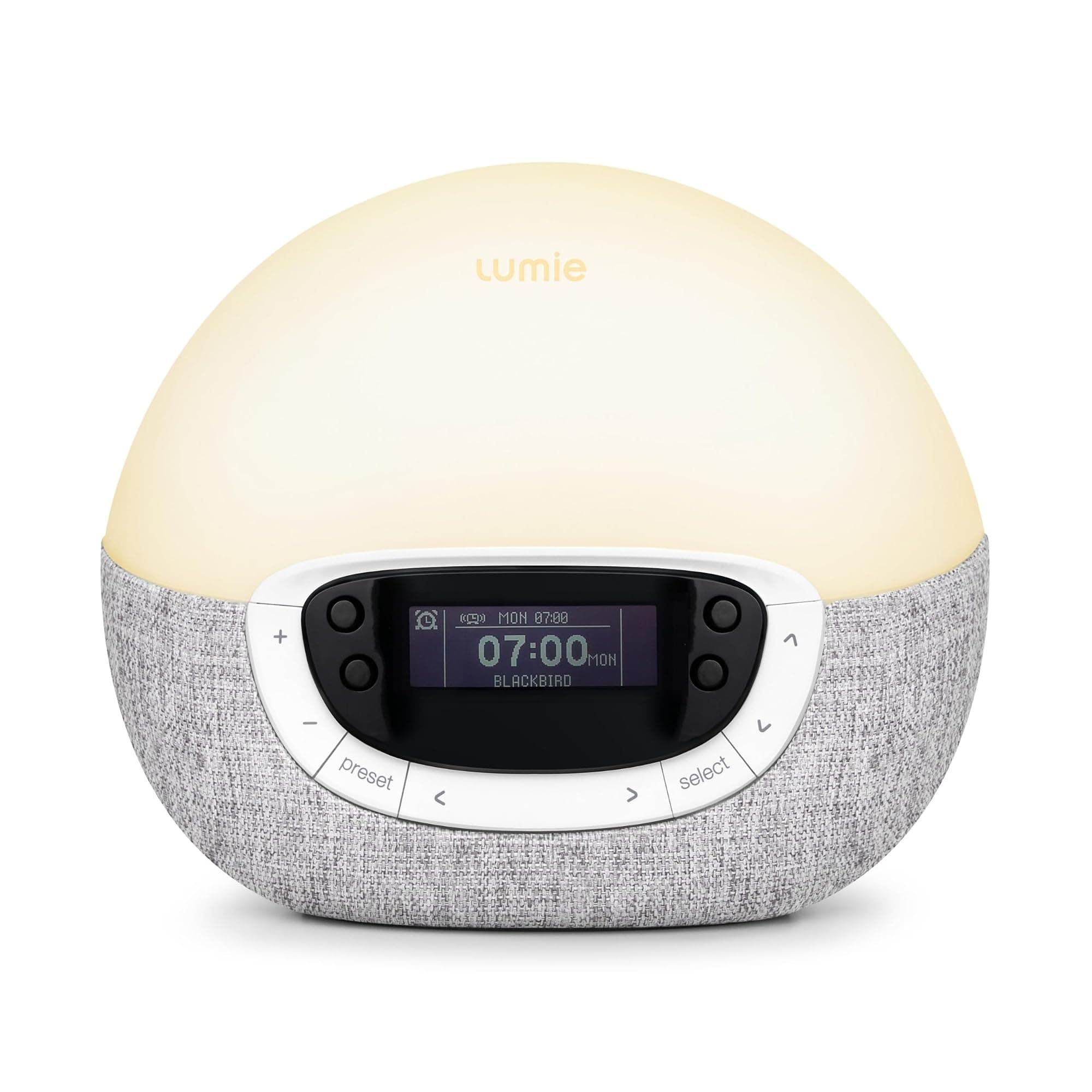
Lumie Bodyclock Shine 300
4.3 · 3,100 reviews
Editor score8.5/10
Best for: Slow wakers, light-sensitive sleepers, ramp tinkerers
Lowest price we found
$169.00
At Amazon · checked 2026-07-02
Buy at Amazon · $169.00 ↗Updated 2026-07-02
Sunrise ramp
15-90 min, adjustable
Max brightness
Higher than HF3520
Sounds
15 wake sounds
The sleep-clinic choice — UK light-therapy specialists' sunrise alarm with the most configurable ramp in the category.
Lumie has supplied light-therapy devices to the NHS and elite sport for decades, and the Shine 300 brings that heritage to the bedside: a sunrise adjustable from 15 to 90 minutes (nobody else offers 90), matching sunset fade, 15 wake sounds, and a fully dimmable display. The light tops out brighter than the Philips and the ramp length flexibility matters more than it sounds — slow wakers tend to prefer the long ramp, though no study has compared ramp lengths head to head. It's more expensive and the styling is more clinical than cozy.
Price across 3 retailers
Prices checked 2026-07-02amazon
AmazonBest price✓ Fast delivery · easy returns
15-90 min adjustable ramp
$169.00
2026-07-02
Prices shown were last checked on 2026-07-02and can change at any time — the price on the retailer's site at checkout is the one that applies. As an Amazon Associate and affiliate we may earn a commission on purchases made through these links, at no extra cost to you.
How our prices work
We show the lowest price we found at our last check (2026-07-02) and the manufacturer's list price for comparison. Retail prices — Amazon's especially — move constantly, so treat these as a guide: the price shown on the retailer's own page at checkout is the one that applies. Tap through to see each retailer's current price.
Should you buy it?
What we like
- 15-90 minute ramp — the most adjustable anywhere
- Light-therapy specialist pedigree (NHS supplier)
- Fully dimmable display for light-sensitive sleepers
What to know before buying
- Clinical styling
- Costs more than the Philips
- UK-first brand; US support is thinner
At a glance
Sunrise ramp15-90 min, adjustable
Max brightnessHigher than HF3520
Sounds15 wake sounds
Sunset modeYes — matching fade
App requiredNo
DisplayFully dimmable
SnoozeYes
SubscriptionNone
Best forConfigurable gradual waking
How it scores
How our 8.5/10 breaks down — rated on the dimensions that matter most for sunrise alarms, from hands-on testing and verified specs, not the marketing.
Sunrise quality
9/10
Features
7.5/10
Ease of use
8/10
Build quality
8/10
Value
7/10
Compare with alternatives
Quick verdicts for the sunrise alarms most often considered alongside the Lumie Bodyclock Shine 300.
VS·HEAD-TO-HEAD
Lumie Bodyclock Shine 300 vs Philips SmartSleep Wake-Up Light (HF3520)
The clinical original — the sunrise alarm with actual light-therapy pedigree, still the most natural wake-up design we compared.
→ Dark-winter mornings, heavy sleepers, no-app minimalists
VS·HEAD-TO-HEAD
Lumie Bodyclock Shine 300 vs Loftie Clock (2nd Gen)
The phone-replacer — alarm clock, sound machine, and wind-down routines in one designed object that gets your phone out of the bedroom.
→ Phone-in-bed addicts, design-conscious nightstands
VS·HEAD-TO-HEAD
Lumie Bodyclock Shine 300 vs JALL Wake-Up Light Sunrise Alarm
The $33 gateway — proof the sunrise-alarm effect doesn't require a $150 device, with the compromises you'd expect.
→ First-timers, guest rooms, sunrise-curious budgets
Decision support · what no other comparison site has
Take the quiz · 60 secNot sure which one is right for you?
Our 60-second sleep score quiz asks 8 questions and recommends the right sleep gear for your goals. Built by sleep engineers. Free, no signup.
Editor's deep dive
Is the Lumie Bodyclock Shine worth it?
The short answer
Yes for slow wakers and light-therapy believers: Lumie supplies the NHS, and the Shine 300's 15-to-90-minute adjustable ramp is the most configurable dawn in the category. It out-brightens the Philips; it just costs more and looks more clinical.
Who it's for
Deep sleepers who surface slowly (set the 90-minute ramp), light-sensitive sleepers who need the display fully dark, and anyone who wants their wake-up light made by an actual light-therapy company rather than a gadget brand.
Best for you if…
Very deep / slow wakers Great fit
The 90-minute ramp option exists nowhere else mainstream.
Light-sensitive sleepers Great fit
Display dims to fully off — many rivals glow all night.
Style-first nightstands Decent fit
Function-forward design; the Loftie and Hatch are prettier objects.
US warranty support Decent fit
UK-first brand — support works but is thinner stateside.
Bottom line
The Shine 300 is the enthusiast's wake-up light: more ramp control and more brightness than the Philips, for people who'll actually tune it.
How we scored this
Editorial evaluation against the Philips HF3520 on published specs, independent reviews, and owner consensus — scoring wake grogginess by ramp length, peak brightness at pillow distance, and display darkness. Hands-on testing pending — 30 nights at ramps of 20, 45, and 90 minutes. Reviewer signoff by Dr. Logan Foley, CSSC pending.
More sunrise alarms we compared
See all →
Frequently asked questions
Why would I want a 90-minute sunrise?
Dawn-simulation research has tested ramps of roughly 30 minutes, not longer ones, so this is a preference rather than an evidence-backed upgrade: some slow chronotypes and very deep sleepers report that 30 minutes still feels abrupt. Lumie is the only mainstream option that goes past 40, so it is the one to buy if you want to experiment.
Lumie vs Philips?
Lumie wins on ramp flexibility and peak brightness; Philips wins on polish, price, and the colored-sunrise effect. Both are legitimate light-therapy companies, not clock brands with an LED.
Does it work for kids?
The sunset fade is genuinely useful for bedtime resistance, though for toddlers a dedicated kids' clock with ok-to-wake colors fits the job better.
Is the display readable at night?
It dims to fully off, which light-sensitive sleepers need — a surprising number of cheap sunrise clocks glow all night and sabotage the point.
Affiliate disclosure: SleepyHero earns a small commission when you buy through these links. It doesn't cost you extra. Reviews and rankings are editorial — we don't accept payment for placement.