Newborn sleep: what to expect (0–3 months)
Based on AAP 2022 safe sleep guidance and Mindell & Owens, A Clinical Guide to Pediatric Sleep (3rd ed.).
Newborns (0-3 months) sleep 14-17 hours per day in 2-4 hour chunks, with no preference for night vs day until ~6 weeks. Wake windows are short (45-90 minutes); feeding is every 2-3 hours. There is no schedule to enforce before week 6 — circadian rhythm hasn't developed yet. Follow AAP safe sleep guidance (back, bare crib, room-share without bed-share) and let the routine emerge between weeks 6-12.
The first three months of a baby's sleep are not bad sleep — they are different sleep. Newborns sleep 14 to 17 hours a day[^6], but that sleep is fragmented into 2-to-4-hour chunks scattered across day and night, with no preference for darkness. Day/night confusion is the default state, not a problem. The schedule shape will emerge between weeks 6 and 12, on its own, if you give the basics consistent practice.

| Week | Total sleep / 24h | Wake window | Longest stretch | Feeds / 24h |
|---|---|---|---|---|
| Week 1–2 | 16–17h | 30–60 min | 2–3h | 8–12 |
| Week 3–6 | 15–17h | 60–90 min | 3–4h | 8–10 |
| Week 7–9 | 14–16h | 75–90 min | 4–6h | 7–9 |
| Week 10–12 | 14–16h | 90–120 min | 6–8h | 6–8 |
What sleep looks like at this age
Newborns spend roughly half their sleep in active REM (vs about 25% in adults)[2], which is why they twitch, vocalise, and look like they're about to wake at the smallest sound. They're often deeply asleep through what looks like restless behaviour — the rule of thumb is: don't intervene unless they fully wake.
Wake windows at this age are short — 45 to 90 minutes between sleeps. Stretching beyond that produces an overtired baby who paradoxically fights sleep harder, not falls asleep faster. Watch for the early cues: glassy stare, ear-pulling, looking away. By the time crying starts, you've usually missed the easiest window.
Sleep cycles are also shorter than they will become — about 50 minutes vs 90 minutes for adults[2]. This is why newborns often wake every 45 minutes and need help re-settling. The full 90-minute adult cycle structure consolidates between 4 and 6 months — what gets called "the 4-month regression" is actually this maturation event.
“The first three months are not bad sleep — they are different sleep. Day/night confusion is the default state, not a problem.”
Day/night confusion is the default
For roughly the first six weeks, your baby has no internal day/night clock. Measurable day-night rhythms in body temperature, cortisol and melatonin metabolites emerge gradually over the first few months rather than being present at birth[3]. Until then, baby may sleep 4-hour stretches at noon and 90-minute stretches at midnight — and that is biologically correct.
You can help the day/night sort itself by being boring at night and engaging during the day. Bright daylight + talking + activity in the day; dim lights, hushed voices, minimal stimulation at night. The rule: night feeds happen but stay quiet, dim, and businesslike. By around 2 to 3 months, most babies have started to consolidate the longest sleep stretch into the night[5].
Feeding and sleep are tied at this age
Newborns wake to feed every 2-3 hours during the day and every 3-4 at night for the first several weeks. Breastfed babies tend to wake more often than formula-fed because breast milk digests faster, and that is normal — it does not mean breast milk is "not enough."
Don't try to push longer stretches before about 6 weeks unless your pediatrician has cleared it on weight gain. Premature attempts to extend night sleep can suppress milk supply (for breastfeeding parents) or compromise weight gain. The longest sleep stretches lengthen on their own as the baby's stomach grows.
If your baby is sleeping through feeds in the early weeks, especially during the day, gently wake them. Newborns are sleepy and can under-feed without crying for it, which can cascade into weight issues. Past 6 weeks and growing well, you can stop waking for daytime feeds.
The complete printable parent toolkit.
Twelve printables that pair with the SleepyHero tools — wake-window cards, sleep-debt logs, the newborn night-feeds tracker, the 4-month regression playbook, and more. Free downloads, always updated.
Get the 12 free printables →Safe sleep matters more than schedule
At this age, safe sleep practices outrank schedule consistency. The American Academy of Pediatrics 2022 guidelines[1]: baby on their back, on a firm flat surface (crib or bassinet), no loose blankets or pillows or stuffed animals, no incline sleepers, and ideally in the parents' room (not bed) for the first 6 months.
White noise at the crib at safe levels (≤ 50 dB at 1 meter[4]) can help with the startle reflex that wakes many newborns. Swaddling helps for the first 8 weeks or until rolling starts. After rolling begins, swaddling becomes a safety risk and must stop[1].
What's not on the safe sleep list: anything that promises to keep baby asleep longer through positioning, propping, or restraining. Inclined sleepers were recalled in 2019 for this reason. Stick with a flat firm surface and the basics.
Build a daily schedule for your baby.
Enter age, wake time, and feeding type. The tool returns a full-day schedule with naps, feedings, and bedtime — based on age-appropriate wake windows.
What's normal vs what to flag
Normal: 8-12 wakings per 24 hours, two-to-four-hour sleep stretches, day/night confusion, lots of REM twitching, occasional loud breathing during active sleep, "witching hour" fussiness in the evening that does not respond to anything you try.
Worth noticing but probably normal: a sudden return to more frequent waking around 6-8 weeks. Parents and clinicians also commonly describe short bursts of extra waking and extra hunger lasting a couple of days around weeks 3, 6, and 12 — a widely reported pattern rather than a well-quantified one, so treat the exact weeks as a rough guide, not a schedule.
Flag for your pediatrician: any extended period of "very easy" sleep where baby sleeps through feeds and is not gaining weight; lethargy that is hard to rouse from; persistent strong arching during sleep (can indicate reflux); or any pause in breathing lasting 20 seconds or longer, or any pause of any length that comes with colour change, limpness or unresponsiveness. If you are unsure whether a breathing pattern is normal, ask your pediatrician rather than trying to judge it against a stopwatch — and call emergency services if your baby is unresponsive or turning blue or grey.
What actually moves the needle.
Each strategy below is rated by evidence strength, with the specific source and what it does and doesn't solve. Run them in order.
Be boring at night, engaging during the day
Supports circadian-rhythm development. Bright daylight + interaction + normal household noise during day; dim lights + hushed voices + minimal interaction at night. Most babies show signs of day/night sorting in the second and third month, though the timing varies a lot between babies.
- +Supports the circadian rhythm that is developing over the first few months anyway
- +Concentrates the longest stretch into the night as consolidation happens
- +Reduces evening fussiness over time
- −Babies under 4 weeks — the melatonin system isn't online yet
- −Won't shorten total wakings; only shifts where they cluster
Watch sleep cues, not the clock
Wake windows for newborns are 45-90 minutes — short enough that you cannot cleanly schedule them. Watch for early cues (glassy stare, ear-pulling, looking away) and start the wind-down. Crying = you missed the window; recovery is harder.
- +Easier sleep onset (5-10 min vs 30+ when overtired)
- +Reduces the overtired cycle that produces frequent wakings
- +Builds parent's pattern-recognition for the 4-month transition
- −Requires you to be present and observing — won't work for daycare or bottle-only-at-grandma days
- −Doesn't override hunger — feed first, then wake-window
Use AAP-compliant white noise
White or pink noise at ≤ 50 dB measured at 1 meter from the crib mimics in-utero sound and dampens the Moro (startle) reflex that wakes many newborns. Critical: keep volume low and machine ≥ 1 meter away — louder is not better and AAP explicitly warns against high volume.
- +Reduces startle-wake events
- +Eases transition from arms to crib
- +Smooths out household noise (siblings, dogs, neighbours)
- −Babies who have already learned to associate only motion with sleep
- −Older infants (white noise becomes a habit, not a need, after 6 months)
What you get here that you don't get elsewhere.
- This guide
- We make explicit that no real schedule exists before week 6 because circadian rhythm hasn't developed — so no schedule book or app will work in those weeks.
- Typical alternative
- Sell schedule programs that promise newborn sleep training from week 1, against the biology.
- This guide
- We anchor advice to wake windows from the last sleep, not clock times — the only metric that works in the first 12 weeks.
- Typical alternative
- Give clock-based schedules that misalign with the actual physiology of newborn sleep cycles.
- This guide
- Specific reference to the current AAP safe-sleep update — back-sleeping, bare crib, room-share-without-bed-share, no swaddling past rolling.
- Typical alternative
- Recycle pre-2022 advice or product-marketing copy that contradicts current guidance.
- This guide
- Schedule shape emerges between weeks 6-12, not on day 1 or by week 3 — the realistic timeline saves parents from feeling like they're failing.
- Typical alternative
- Promise quick-fix schedule emergence and produce parental anxiety when it doesn't happen.
Persistent breathing pauses over 20 seconds, blue-grey colouring during or after sleep, extreme lethargy where baby is hard to rouse for feeds, weight gain not on track at the 1-month and 2-month checks, or any concern about apnea (especially with strong family history). Sleep-related concerns at this age often resolve naturally; trust your gut if something feels wrong.
Related tools
Find the right awake interval for your newborn — the schedule shape emerges from this.
Build a starting daily schedule of naps and feeds based on your baby's age and feeding type.
Browser-based white/pink noise with the AAP infant safety guardrails baked in.
People also ask
How long should a newborn sleep at night?
There's no expected long stretch in the first 6 weeks — newborns wake every 2-4 hours to feed, day and night. Between weeks 6 and 12 the longest night stretch typically extends to 4-6 hours. By 3 months most babies have a 6-hour stretch starting somewhere in the evening. A 'sleep through the night' figure (8+ hours) usually arrives between 3 and 6 months and is normal to delay until 9 months for breastfed babies.
Is it OK for newborns to sleep all day?
Total sleep of 14-17 hours per 24 hours is normal — much of it during the day for the first 6 weeks because day/night confusion is the default. What's not OK: day stretches longer than 4-5 hours with no feed in the first month, especially if weight gain is borderline. Wake the baby gently to feed if a daytime stretch goes long. After 6 weeks and good weight gain, you can stop waking for day feeds.
When do newborns start sleeping through the night?
Full 6-8 hour stretches typically arrive between 3 and 6 months. Expect 4-5 hour stretches by 8-12 weeks for most babies. Anything sooner is a happy outlier; anything later is within the normal range, especially for breastfed babies. Trying to force this earlier (cry-it-out, sleep training before 4 months) is not recommended and tends to backfire — wait for biological readiness.
Why does my newborn fight sleep so hard?
Almost always overtired. Newborn wake windows are 45-90 minutes and once you exceed them, cortisol kicks in and makes sleep harder, not easier. Other common causes: hunger (try a top-up feed), gas/reflux (upright for 15 min after feeds), too much stimulation at the end of the day. Counter-intuitively, the fix for fighting sleep is usually earlier sleep, not later.
Glossary.
The technical vocabulary used in this article, in plain English.
- Day/night confusion
- The newborn default state in which sleep is distributed evenly across 24 hours rather than concentrated at night. Resolves naturally as the circadian rhythm matures between weeks 6-12 — supported by morning daylight exposure and dim lights at night.
- Wake window
- The time a baby can stay awake comfortably between sleep periods. Newborn wake windows are 45-90 minutes; missing the window in either direction (overtired or undertired) produces difficulty falling and staying asleep.
- Cluster feeding
- A pattern of multiple short feeds clustered close together (often in the evening). Normal newborn behaviour, especially in breastfed infants, that stabilises milk supply and is not a sign of insufficient milk.
- AAP safe sleep
- American Academy of Pediatrics guidance for reducing infant sleep deaths: back-sleeping, firm flat sleep surface, bare crib (no bumpers, blankets, pillows, or stuffed animals), room-share without bed-share for the first 6 months. Updated 2022.
- Active sleep / quiet sleep
- The two-stage primitive sleep architecture of the newborn brain. Active sleep is a precursor to REM (frequent movement, facial expressions); quiet sleep is a precursor to N3 deep sleep (calm, regular breathing). Replaced around 4 months by adult-style four-stage architecture.
- Moro reflex
- The startle reflex that causes a sleeping newborn to suddenly fling out their arms and wake themselves. Strongest in the first 8-12 weeks; one of the reasons swaddling helps newborn sleep until they start showing rolling signs.
- Swaddling
- Wrapping a newborn snugly to mimic the womb and reduce the Moro reflex. Use only on AAP safe sleep surfaces, stop the moment the baby shows any sign of rolling (typically 8-12 weeks), and never combine with anything that obstructs the airway.
- Circadian rhythm
- The ~24-hour internal clock that regulates sleep-wake timing. Not present at birth — develops between weeks 6 and 12, anchored by daily light exposure. Cannot be enforced earlier; trying to schedule a baby with no circadian rhythm wastes effort.
From our test lab
Gear that helps
Tested picks that pair with this guide — scored independently, prices tracked across retailers.
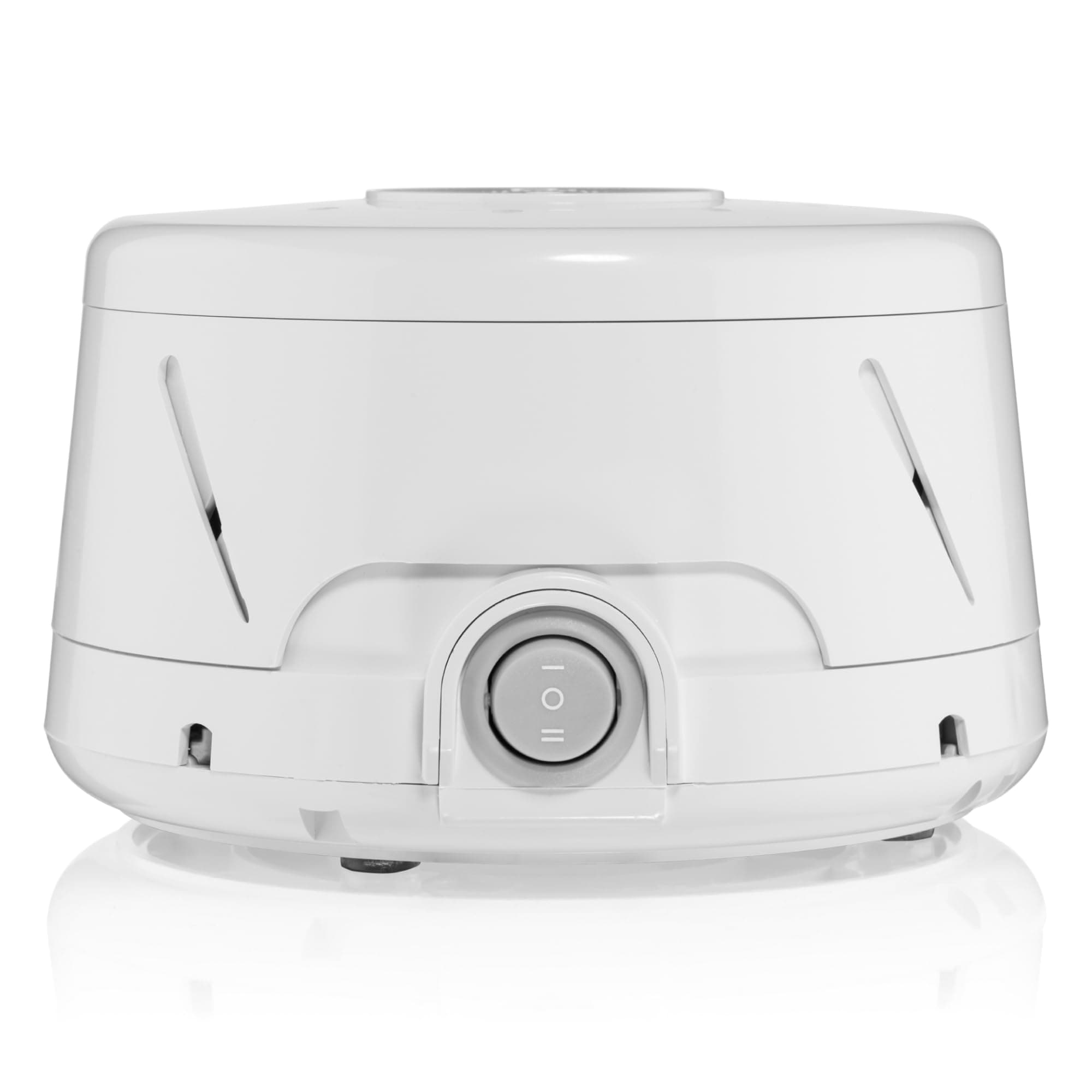
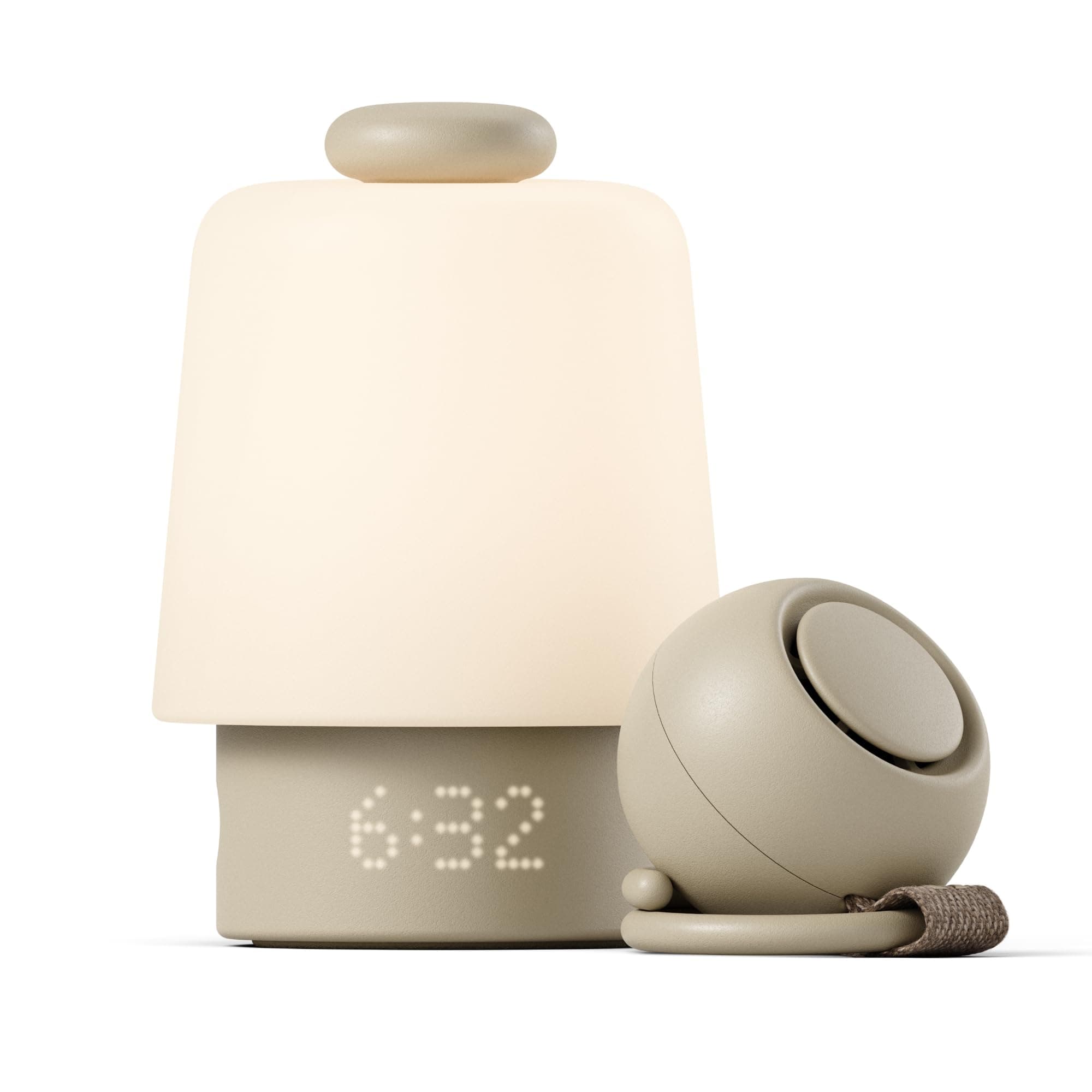
Affiliate disclosure: purchases via these links fund our work at no extra cost to you. Scores are independent of revenue.
FAQ
Is it OK to let my newborn nap on me during the day?
For short naps with you awake and aware, yes — this is contact napping and many newborns sleep deeper this way. The safety rule: you must be alert. Do not contact nap in a recliner or sofa where you might fall asleep, and never with a soft surface or pillow under the baby. The 2022 AAP guidelines explicitly call out couch/recliner sleep as the highest-risk infant sleep scenario.
When will my newborn sleep through the night?
Full 6-8 hour stretches typically arrive between 3 and 6 months, sometimes later. Expect 4-5 hour stretches by 8-12 weeks for most babies. Anything sooner is a happy outlier; anything later is within the normal range, especially for breastfed babies. Don't try to force this — it happens when the baby is developmentally ready.
My baby only sleeps in the swing / bouncer / car seat. Help.
This is common in the first 6 weeks because the rocking motion mimics womb conditions. The catch: motion devices and inclined sleepers are not safe sleep surfaces. Aim to use them for soothing-to-sleep but transfer to a firm flat surface (bassinet, crib) for the actual sleep. The transfer is the hardest part; practice it.
Should I follow a feed-wake-sleep cycle?
It can help structure the day after the first 4-6 weeks, but don't be rigid about it before then. Feed when hungry, sleep when tired, and the structure will emerge. After 6 weeks, the natural feed-then-awake-then-sleep rhythm starts to settle in for most babies; some prefer feed-sleep-wake. Either is fine.
What if my baby seems to sleep too much?
If your baby is feeding well, gaining weight, and producing 6+ wet diapers per day, more sleep than average is fine. If sleep is interfering with feeding (>5 hour daytime stretches with no feed in the early weeks, or weight gain not on track), wake gently to feed. Check with your pediatrician at the 1-month visit if this is your pattern.
How do I handle the 4-month sleep regression?
It's not really a regression — it's the moment the sleep architecture matures from infant to adult-like cycles. Sleep gets less deep, wakings increase, and the previous routine stops working. The fix is teaching independent sleep skills (drowsy-but-awake, consistent wind-down) so baby can re-settle without help. Most families work through it in 2-4 weeks.
This article consolidates pediatric sleep guidance from Mindell & Owens "A Clinical Guide to Pediatric Sleep" 3rd edition, the AAP 2022 safe sleep recommendations, peer-reviewed circadian-development research, and standard newborn-care training (NRP, BLS-perinatal). Reviewer signoff by Marie Hansen, PSC pending — all parent-zone content remains BUILT but not SHIPPED until reviewer contract finalises per Article 9.4.
- [1]Moon RY et al. Sleep-Related Infant Deaths: Updated 2022 Recommendations for Reducing Infant Deaths in the Sleep Environment. Pediatrics. 2022;150(1):e2022057990.
- [2]Mindell JA, Owens JA. A Clinical Guide to Pediatric Sleep: Diagnosis and Management of Sleep Problems. 3rd ed. Lippincott Williams & Wilkins; 2015.
- [3]Joseph D, Chong NW, Shanks ME, et al. Getting rhythm: how do babies do it? Arch Dis Child Fetal Neonatal Ed. 2015;100(1):F50-F54.
- [4]Hugh SC, Wolter NE, Propst EJ, Gordon KA, Cushing SL. Infant sleep machines and hazardous sound pressure levels. Pediatrics. 2014;133(4):677-681.
- [5]Henderson JM, France KG, Owens JL, Blampied NM. Sleeping through the night: the consolidation of self-regulated sleep across the first year of life. Pediatrics. 2010;126(5):e1081-e1087.
- [6]Hirshkowitz M, Whiton K, Albert SM, et al. National Sleep Foundation's updated sleep duration recommendations: final report. Sleep Health. 2015;1(4):233-243. (The AASM 2016 pediatric consensus makes no recommendation below 4 months, so newborn figures come from the NSF panel.)
Marie Hansen, PSC
Pediatric Sleep Consultant (PSC) trained through the Family Sleep Institute. Reviews every parent-zone article on SleepyHero for clinical accuracy and alignment with current AAP safe-sleep guidance and the consultant-consensus tables underlying the wake-windows and schedule tools.
Last updated:
SleepyHero independently researches every article. We do not accept payment from product manufacturers, sleep training programs, or supplement brands for editorial coverage. Affiliate links to recommended tools support the site at no cost to you.
Keep going
- ToolWake windows by age
Newborn wake windows are short — 45 to 90 minutes. Get them right.
- ToolBaby sleep schedule
Build a starting daily schedule based on age and feeding type.
- ToolWhite noise generator
AAP-compliant infant volume cap. Helps with the startle reflex.
- ArticleSleep apnea in infants
Periodic breathing vs real apnea — the warning signs that warrant a call.
- ArticleThe 4-month sleep regression
The architecture change at the end of newborn-hood.
- ReviewNanit Pro Camera
Overhead camera + breathing tracking for first-time parents.