Preschool sleep: 3–5 years
Based on the AASM 2016 sleep duration consensus, the pediatric parasomnia literature (Mason & Pack 2007; Petit et al. 2015), and evening-light and screen-time sleep research.
Preschoolers (3-5 years) sleep 10-13 hours per 24 hours, typically all overnight once the nap drops between ages 3-5. Bedtime stretches to 7:30-8:30 PM. The new sleep disruptors at this age are imagination-driven fears (peaking around 4), bright light and screens in the hour before bed — preschool-age children show strong melatonin suppression in response to evening light — and the kindergarten transition. The strongest single intervention is locking bedtime to a 30-minute window.
Preschool sleep is the bridge between toddler structure (nap + early bedtime) and school-age structure (no nap, later bedtime, fixed wake time). Most kids drop the daytime nap somewhere between 3 and 5[^1], total daily sleep settles around 10-13 hours, and bedtime stretches to between 7:30 and 8:30 PM. The big new factors at this age: imagination-driven fears, expanded media exposure, and the kindergarten transition that kicks the schedule.

| Age | Total sleep / 24h | Daytime nap | Typical bedtime | Typical wake |
|---|---|---|---|---|
| 3 years | 10–13h | Often 1h, dropping | 7:30–8:00 PM | 6:30–7:00 AM |
| 4 years | 10–13h | 0–1h (most drop) | 7:30–8:30 PM | 6:30–7:00 AM |
| 5 years (pre-K) | 10–13h | Rarely needed | 8:00–8:30 PM | 6:30–7:00 AM |
| 5 years (K-start) | 10–12h | None | 7:30–8:00 PM | 6:30 AM (school) |
The nap-to-no-nap transition
Most kids drop the nap between 3 and 5 years[1]. The signs of readiness: refusing to nap consistently for 2+ weeks, not visibly cranky in the late afternoon on no-nap days, and nighttime sleep staying solid (no early waking, no harder bedtime).
Drop the nap gradually rather than abruptly. A common pattern: alternate nap and no-nap days for a few weeks. On no-nap days, replace the nap slot with quiet rest time — same room, dim light, books or audio stories, no demands. This preserves the wind-down ritual without forcing sleep.
The first weeks after dropping the nap usually need an earlier bedtime — 7 PM instead of 7:30 — to compensate for the lost daytime sleep. After 4-6 weeks, kids settle into the new total sleep pattern and bedtime can drift back to its previous time.
“Sleep-deprived preschoolers don't look tired. They look angry, defiant, or 'spirited.' If your kindergartener is having a hard time, the first thing to audit is total nightly sleep — adding 30-60 minutes often resolves what looks like a behavioural issue.”
Imagination-driven fears
Around 3-5 years, imagination kicks into high gear and bedtime fears intensify. Monsters under the bed, fear of the dark, fear of being alone, fear of bad dreams. This is developmentally normal[2] — the same imagination that produces creative play also produces vivid worry.
The standard approach: validate without reinforcing. "I see you're scared. The shadow on the wall is the chair. We can leave the door open and the hallway light on." Avoid two extremes: dismissing the fear ("there's nothing there") which makes the child feel unheard, and elaborating it ("let's check the closet for monsters") which confirms the fear is reasonable.
Tools that help: a dim warm-color nightlight, a "monster spray" (water in a bottle, sprayed at bedtime), a stuffed animal positioned as a defender, predictable books that resolve the fear narrative (Where the Wild Things Are normalizes the fear-then-resolution arc). Most fears peak at 4 years and fade by 6.
Bedtime routine evolution
By preschool, bedtime routine should be structured but flexible — 30-45 minutes, same general order, with room for the child to participate[3]. A typical sequence: dinner → bath (every other night by this age) → PJs and brushing teeth → 2-3 books → song or quiet talk → lights out.
Independent reading time can join the routine around 4-5 years if reading is starting. The child reads (or "reads") in bed for 10-15 minutes, then lights out. This builds a positive association with bed-as-calming-place and supports literacy.
What pushes routines off track at this age: screens within 60 minutes of bedtime — bright light and activating content both fight sleep onset. In a laboratory study of preschool-age children, an hour of bright light before bed suppressed melatonin by roughly 88% on average, and levels stayed depressed for at least 50 minutes after the light was switched off[6]; separately, a systematic review of 67 studies in school-aged children and adolescents found screen time adversely associated with sleep duration and timing in 90% of them, though it did not establish causation[4]. Also on the list: inconsistent bedtimes that swing more than 30 minutes night-to-night. The single highest-leverage change for most preschoolers is locking the bedtime to a 30-minute window.
The complete printable parent toolkit.
Twelve printables that pair with the SleepyHero tools — wake-window cards, sleep-debt logs, the newborn night-feeds tracker, the 4-month regression playbook, and more. Free downloads, always updated.
Get the 12 free printables →Common preschool sleep issues
Bedtime resistance: most often caused by overtiredness or by an inconsistent endpoint. The fix is an earlier bedtime + a clear "no negotiation after lights out" rule. Two-choice authority works at this age: "Do you want one book or two?" The choice creates buy-in without dilution of the structure.
Night wakings: less frequent at this age. When they happen, it's usually a bad dream, a need for water, or a need for the bathroom. Quick brief response, return to bed, no extended interaction. If wakings cluster around 2-3 AM and child is hard to settle, look at total daytime sleep — overtiredness causes more night waking, not less.
Early waking (5 AM): usually means bedtime is too early or napping has crept back in. By preschool, most kids do better on a later bedtime + no nap than on an earlier bedtime + nap.
Sleepwalking and night terrors: both are non-REM arousal phenomena — frightening for parents, but not harmful to the child[7]. In a large longitudinal cohort, sleep terrors were most common in the preschool years and declined steadily with age, while sleepwalking became more common later in childhood[5]. Don't wake the child; ensure safety; let the episode pass. Recurrent nightly episodes warrant a pediatric sleep consult.
Kindergarten and school readiness
The kindergarten transition (typically age 5) often forces a schedule reset. School start times require fixed early wake-ups (often 6:30 AM), which means bedtime needs to settle around 7:30-8 PM to hit the AASM target of 10-13 hours per 24 hours for ages 3-5[1]. (From age 6 the AASM target steps down to 9-12 hours.)
Start the schedule shift 2-3 weeks before school starts. Move bedtime 15 minutes earlier each week, move wake time 15 minutes earlier each week, until you're at the school-day schedule. Don't try to do it abruptly the night before school starts.
Sleep-deprived kids in kindergarten show as behavioural problems, attention problems, and emotional reactivity — not as visible tiredness. If your kindergartener is having a hard time, the first thing to audit is total nightly sleep against the 10-13 hour target. Adding 30-60 minutes of sleep often resolves what looks like a behavioural issue.
What actually moves the needle.
Each strategy below is rated by evidence strength, with the specific source and what it does and doesn't solve. Run them in order.
Lock bedtime to a 30-minute window
Preschool sleep is most affected by bedtime drift. A bedtime that swings between 7:30 PM and 9:30 PM produces a chronically under-slept child even if total hours look acceptable on average. Pick a 30-minute target window (e.g., 7:30-8:00 PM) and hit it 6 nights a week. The schedule consistency does more work than any other intervention at this age.
- +Reduces bedtime resistance within 1-2 weeks
- +Stabilises wake time, naps, mood, appetite
- +Eases the kindergarten transition when it lands
- −Doesn't fix screen-time-driven sleep onset delay alone
- −Won't override structural anxiety issues — those need separate work
Cut screens 60 minutes before bedtime, no exceptions
Evening light suppresses melatonin strongly in preschoolers, and activating content from fast-cut shows adds arousal on top. The 60-minute pre-bed cut is the cleanest single rule. Replace with books, audio stories, or quiet talk.
- +Removes the strongest known evening cue against melatonin onset
- +Cuts the pre-bed arousal that activating content adds
- +Easier morning wake-up
- −If screen time happens earlier in the day, that's largely fine
- −Audiobooks/podcasts in bed are a different category — generally OK
Validate fears without reinforcing them
Preschool imagination peaks at 4. Monsters, dark, bad dreams, fear of being alone. Two equally bad responses: dismissing ("there's nothing there") makes the child feel unheard and the fear larger; elaborating ("let's check for monsters") confirms the fear is reasonable. The middle path: name what's real, name what's not, give a tool, exit calmly.
- +Keeps the fear from hardening into bedtime avoidance
- +Builds child's coping toolkit (transferable to dental visits, first day of school, etc)
- +Prevents fear-of-bedtime spiral
- −Fears tied to specific trauma or loss — those warrant a child therapist
- −Won't override late-night scary media exposure
What you get here that you don't get elsewhere.
- This guide
- We cite the one study run on preschoolers specifically (Akacem 2018: ~88% melatonin suppression from an hour of evening bright light, n=10), separate it from the school-age screen-time literature, and explain the brightness × content variable — actionable rather than vague 'reduce screen time'.
- Typical alternative
- Generic 'no screens before bed' advice without the timing window or the brightness/content distinction.
- This guide
- Frame imagination-driven fears as a peak-at-4 developmental milestone with reassurance-based response — not anxiety to medicate or avoid all media triggers around.
- Typical alternative
- Treat all bedtime fears as pathological and recommend escalating intervention.
- This guide
- Concrete 2-week 15-minute-increment shift protocol so the schedule arrives at school-ready before day one — not after a brutal first week.
- Typical alternative
- Tell parents to 'start adjusting' without the protocol or the lead time.
- This guide
- Specific replacement protocol (30-45 min low-stim activity in defined space) that preserves the parental break and prevents overtiredness during the nap drop.
- Typical alternative
- Treat the nap drop as a binary on/off and skip the transition support.
Persistent loud snoring with daytime sleepiness or behavioural issues (often adenoid-tonsil related, surgically treatable), severe recurrent night terrors that affect family functioning, sleepwalking that creates safety concerns, persistent bed-wetting beyond 5-6 years that is new (not continuous from toddlerhood), or any sudden major change in sleep pattern. Pediatric sleep specialists can evaluate when general pediatricians cannot.
Related tools
Wake-window data extends through age 5 — useful through the nap-drop transition.
Once your child is in kindergarten, the family sleep-debt calculator works for tracking adult and older-child sleep loss.
Helpful through preschool years for masking household sounds. Cap volume to safe levels for shared rooms.
People also ask
When do kids stop napping?
Most children drop the nap between 3 and 5 years. Signs of true readiness: refusing nap consistently for 2+ weeks AND not visibly cranky in the late afternoon AND nighttime sleep stays solid. The transition takes 4-6 weeks; expect an earlier bedtime during the gap. Quiet rest time (books, audio stories, no demands) replaces the nap slot and preserves the wind-down ritual.
How much sleep does a 4-year-old need?
10-13 hours per 24 hours per the AASM 2016 consensus. For a typical 4-year-old, that's an 8-8.5 PM bedtime with a 7 AM wake, or earlier if they still nap. Sleep-deprived 4-year-olds often present as 'spirited' or defiant rather than visibly tired — if behavioural issues are growing, audit total sleep first.
What's the right bedtime for kindergarten?
7:30-8 PM for most kindergarteners. The AASM target of 10-13 hours per 24 hours for ages 3-5, combined with a typical 6:30 AM school wake, puts bedtime around 7:30-8. Start the schedule shift 2-3 weeks before school starts (15 minutes earlier per week) rather than abruptly the night before. Weekend bedtime should stay within 30 minutes of weekday bedtime.
Are screens really bad before bed?
The evidence points that way, and the hour before bedtime is where it matters most. Two compounding effects: evening light suppresses melatonin — in preschoolers specifically, an hour of bright light before bed cut melatonin by about 88% (Akacem et al. 2018) — and activating content, especially fast-cut shows, adds arousal that fights sleep onset. The Hale & Guan 2015 systematic review found screen time adversely associated with sleep in 90% of 67 studies, though those were school-aged children and adolescents and the authors were explicit that causation was not established. Earlier-day screen time within AAP recommendations (≤1 hour/day of high-quality programming, ages 2-5) is a different question.
Glossary.
The technical vocabulary used in this article, in plain English.
- Nap drop
- The transition from a daytime nap to no nap, typically between ages 3-5. Driven by maturing sleep pressure dynamics — when the child can stay awake all day without overtiredness, the nap is no longer needed. Replace with quiet rest time, not negotiation.
- Imagination-driven fears
- Bedtime fears tied to developing imagination — monsters, the dark, being alone. Peak around age 4 and resolve by 6-7. Treat with reassurance and consistency, not avoidance of all 'scary' content (which tends to make fears more powerful, not less).
- Screen-time melatonin suppression
- Evening light exposure suppresses melatonin release. In preschool-age children specifically, an hour of bright light before bedtime suppressed melatonin by about 88% on average and levels remained depressed for at least 50 minutes afterwards (Akacem et al., Physiol Rep 2018). Both the light and the activating content matter — dim and slow-paced beats bright and fast-cut.
- Kindergarten transition
- The schedule reset when school starts — typically requires shifting bedtime 60-90 minutes earlier and anchoring a fixed wake time. Best to start the shift 2 weeks before the first school day, in 15-minute increments.
- Bedtime fading
- Temporarily moving bedtime later (closer to natural sleep-onset time) to break the resistance pattern, then gradually pulling it earlier in 15-minute increments. Works particularly well for preschoolers stuck in 30-60 minute bedtime stalls.
- Sleep-onset association
- Whatever conditions a child needs to fall asleep — parent in room, specific lovey, white noise. Becomes a problem when those conditions can't be reproduced at end-of-cycle wake-ups (parent has left the room, etc).
- Quiet rest time
- The post-nap-drop replacement: 30-45 minutes of low-stimulation activity (books, puzzles, audio stories) in a defined space. Preserves the parental break that the nap provided and prevents overtiredness on transition days.
- Parasomnias
- Sleep-related behaviours (sleepwalking, night terrors, sleep talking, bedwetting) that arise from incomplete arousals during deep sleep. Most preschool parasomnias are benign and outgrown; persistence past age 7-8 warrants pediatric evaluation.
From our test lab
Gear that helps
Tested picks that pair with this guide — scored independently, prices tracked across retailers.
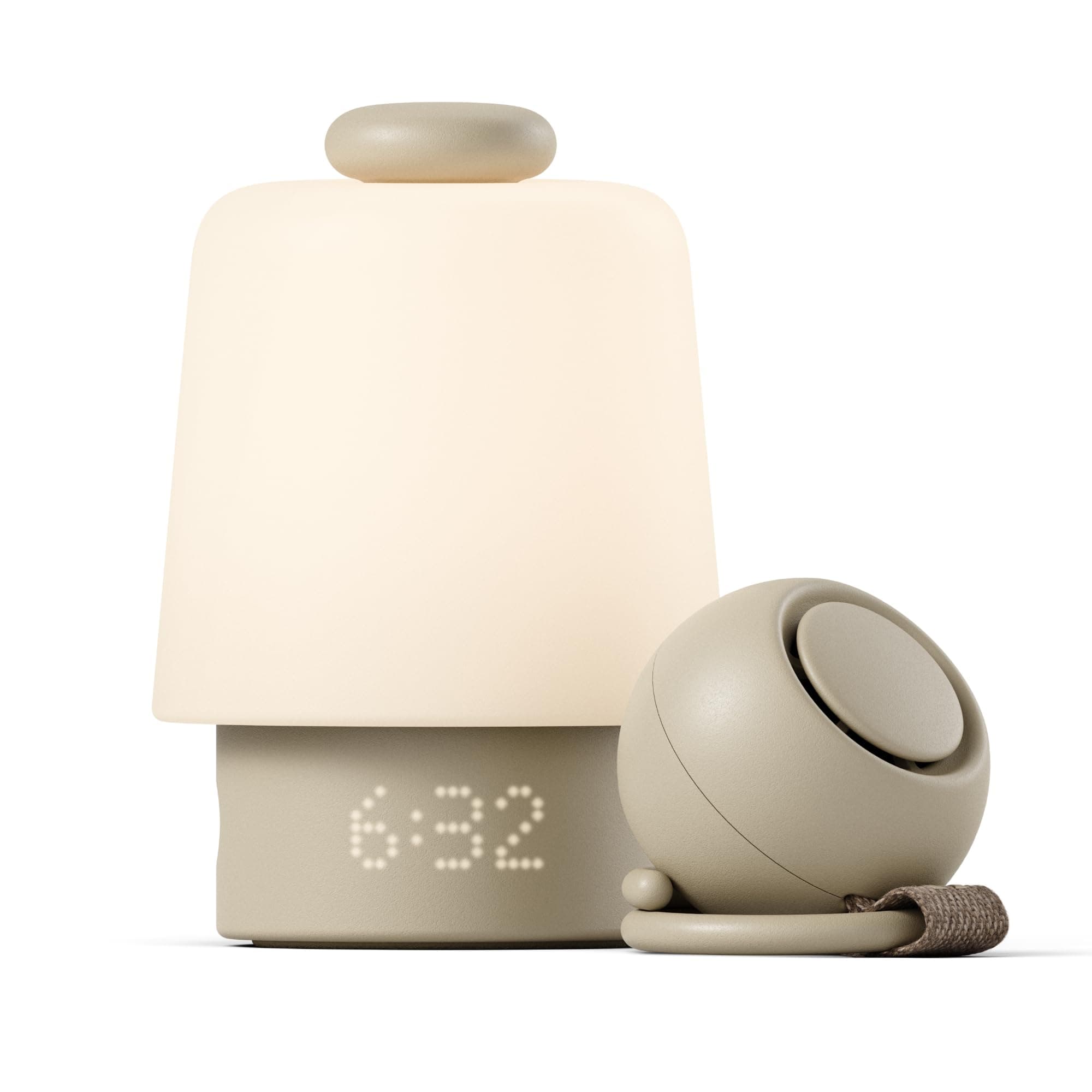

Affiliate disclosure: purchases via these links fund our work at no extra cost to you. Scores are independent of revenue.
FAQ
My 4-year-old still naps. Is that OK?
Yes if night sleep is solid and bedtime isn't pushed late. Some 4-year-olds nap until kindergarten and that's fine. The rule of thumb: nap is fine if total daily sleep is in range (10-13 hours) and bedtime is sustainable (before 8 PM). If the nap is pushing bedtime to 9 PM, drop the nap.
What's the right bedtime for a 5-year-old?
Aim for 7:30-8 PM for school-age 5-year-olds. The 10-13 hour daily sleep target combined with the school wake time (often 6:30 AM) puts bedtime around 7:30 PM. Weekend bedtime within 30 minutes of weekday bedtime is the consistency rule that keeps the schedule from drifting.
How do I handle nightmares without making it worse?
Brief comforting, brief return-to-bed, minimal extended discussion. Don't ask leading questions about "what was scary" — preschoolers will elaborate to keep your attention. Validate ("that sounded scary, you're safe now") and exit. Most nightmares are forgotten by morning. If a specific recurring theme emerges, talk about it during the day, not at bedtime.
Is it normal for my 4-year-old to want to sleep in our bed?
Common, but worth holding the boundary. Bed-sharing with preschoolers is generally not recommended (child sleeps less deeply with adult movement, parents sleep worse, and the habit is hard to undo before kindergarten). If your child seeks the bed for fear or anxiety, address the underlying issue and return them to their bed each time. Consistency is the key.
Screens before bed — really not OK?
Best avoided in the 60 minutes before bedtime. Two reasons: evening light suppresses melatonin — preschoolers show a strong response, with about 88% suppression after an hour of bright light in one lab study — and activating content (especially fast-cut shows) creates arousal that fights sleep onset. Books, audio stories, or quiet talk are better wind-downs. Screens earlier in the day are fine if total screen time is within recommendations (AAP: ≤1 hour/day of high-quality programming for ages 2-5).
What about a sleep training reset for a 4-year-old?
Possible but different from infant sleep training. By preschool, the issue is usually a routine break or a bedtime-environment problem, not a sleep skills problem. Resets at this age are about: locking the bedtime, reinforcing the routine, and using the OK-to-wake clock as a visual rule. Crying-method sleep training is not appropriate at this age — talk-and-clock-based methods work and are kinder.
Article consolidates pediatric sleep guidance from Mindell & Owens "A Clinical Guide to Pediatric Sleep" 3rd ed., the AASM 2016 sleep duration consensus, the pediatric parasomnia literature (Mason & Pack, Sleep 2007; Petit et al., JAMA Pediatr 2015), the Hale & Guan 2015 screens + sleep systematic review (67 studies, school-aged children and adolescents), Akacem et al. 2018 on evening light and melatonin in preschoolers, and the Mindell 2009 bedtime routine RCT. Reviewer signoff by Marie Hansen, PSC pending.
- [1]Paruthi S, Brooks LJ, D'Ambrosio C, et al. Recommended Amount of Sleep for Pediatric Populations: A Consensus Statement of the American Academy of Sleep Medicine. J Clin Sleep Med. 2016;12(6):785-786.
- [2]Mindell JA, Owens JA. A Clinical Guide to Pediatric Sleep: Diagnosis and Management of Sleep Problems. 3rd ed. Lippincott Williams & Wilkins; 2015.
- [3]Mindell JA, Telofski LS, Wiegand B, Kurtz ES. A nightly bedtime routine: impact on sleep in young children and maternal mood. Sleep. 2009;32(5):599-606.
- [4]Hale L, Guan S. Screen time and sleep among school-aged children and adolescents: a systematic literature review. Sleep Med Rev. 2015;21:50-58.
- [5]Petit D, Pennestri MH, Paquet J, et al. Childhood sleepwalking and sleep terrors: a longitudinal study of prevalence and familial aggregation. JAMA Pediatr. 2015;169(7):653-658.
- [6]Akacem LD, Wright KP Jr, LeBourgeois MK. Sensitivity of the circadian system to evening bright light in preschool-age children. Physiol Rep. 2018;6(5):e13617.
- [7]Mason TB 2nd, Pack AI. Pediatric parasomnias. Sleep. 2007;30(2):141-151.
Marie Hansen, PSC
Pediatric Sleep Consultant (PSC) trained through the Family Sleep Institute. Reviews every parent-zone article on SleepyHero for clinical accuracy and alignment with current AAP safe-sleep guidance and the consultant-consensus tables underlying the wake-windows and schedule tools.
Last updated:
SleepyHero independently researches every article. We do not accept payment from product manufacturers, sleep training programs, or supplement brands for editorial coverage. Affiliate links to recommended tools support the site at no cost to you.
Keep going
- ToolWake windows by age
Wake-window data extends through age 5 — useful through nap drop.
- ToolSleep debt calculator
For the family — track total sleep loss across the kindergarten transition.
- ToolWhite noise generator
Helpful for masking household sounds in shared rooms.
- ArticleToddler sleep: 1–3 years
Where you came from — toddler routines transfer.
- ArticleInfant sleep: 4–12 months
Reference for the foundational sleep skills.