Meditation for sleep, ranked by what trials actually show.
Four techniques have randomised-trial evidence for sleep specifically: body scan, MBSR, NSDR (yoga nidra), and guided imagery. Two popular options — “sleep meditation playlists” and generic “mindful breathing” — don’t. The difference between them is structure. The active ingredient is giving the mind a defined task, not background calm.[1]

The evidence ranking — 4 techniques work, 2 don’t.
Our editorial composite, not a published score. The four techniques above the line have randomised-trial evidence for sleep outcomes. The two below are popular but essentially unstudied as discrete interventions.
The 4 techniques worth your time.
Body scan meditation — the trial-proven default.
Lie down (sitting up if drowsy), close eyes, mentally move attention from feet to head, releasing tension in each region for 30 seconds before moving on. 15-20 minutes total. The active ingredient is the systematic attention shift, which interrupts cognitive arousal. Body scan rarely gets tested on its own — it's usually one component of a broader mindfulness programme — so read the evidence below as support for the programme it sits inside.
- +Onset insomnia from physical tension
- +People who can't 'just clear their mind' (gives the mind a job)
- +Anxious bedtime body buzz
- −Sleep maintenance issues (3am wakes — different cause profile)
- −People with chronic pain conditions (focus on tension can amplify it)
- −Severe trauma — body-scan can be triggering, work with a clinician
Mindfulness-based stress reduction (MBSR) — daily practice, not just bedtime.
10-15 min daily of focused-attention meditation (breath as anchor; notice thoughts, return to breath). The benefit for sleep accumulates over 4-6 weeks of daily practice — it's not a one-night fix. This is the most-studied sleep meditation modality. In a randomised trial of 54 adults with chronic insomnia, the meditation arms cut total wake time by about 44 minutes a night versus roughly one minute in the self-monitoring control, and half the mindfulness-for-insomnia group were in remission at six months.
- +Chronic insomnia building over months/years
- +Anxiety-driven sleep onset failure
- +Reducing reliance on sleep medication long-term
- −Acute one-night sleep emergencies
- −Sleep apnea or any structural issue
- −People not committed to daily practice (effect builds, not instant)
NSDR / yoga nidra — designed for lying down.
Non-sleep deep rest (NSDR) is yoga nidra repackaged. 10-20 min lying down, guided through a structured body-and-breath sequence. Goal: reach a hypnogogic state without falling asleep. A 41-person randomised trial in chronic insomnia compared yoga nidra against cognitive behavioural therapy using sleep diaries and polysomnography, and found improvements in deep (N3) sleep, total wake time and subjective sleep quality. Andrew Huberman popularised the 'NSDR' framing; the technique is decades old, and the widely-repeated claim that a short session equals an hour-long nap does not come from a study.
- +Sleep onset, daytime recovery, anxiety reduction
- +People who fall asleep too fast to get through other meditation types
- +Travel days — quick reset between meetings
- −If you fall asleep fully — that defeats the purpose (try sitting up)
- −Severe insomnia (use MBSR for the underlying issue)
- −Cardiovascular conditions where supine HR drops are risky
Guided imagery — for the visualisers.
10-15 min following a verbal guide through an imagined calming scene (beach, forest, mountain). The mechanism has actually been tested: in a study of people with insomnia, being given an engaging image to hold shortened sleep onset and quietened pre-sleep thinking, while simply being told to 'distract yourself' did nothing. The image has to occupy enough mental space to crowd out rumination — vague instructions to relax don't.
- +Visual thinkers (artists, designers, engineers)
- +People who find body scan too body-focused
- +Children and teens (more engaging than abstract mindfulness)
- −Aphantasia (inability to visualise) — try body scan instead
- −If the guide's voice or scene is jarring, switch — fit matters
How much, how often — the dose curve.
- • First week: 10 min daily. Anything is better than nothing — get the habit.
- • Week 2-3: 15 min daily. Long enough to get past the fidgety opening minutes of a session.
- • Week 4-6: 15-20 min daily, and this is the window where the trials started measuring improvement — not week one.
- • Maintenance: 15 min daily, ideally same time. Skip a day occasionally — the practice is robust to gaps.
“The bait-and-switch most meditation content does: implies one session will fix your insomnia, then you don't notice an effect, then you stop. The trials are clear — effect builds over weeks of daily practice. Treat it like exercise, not like a sleeping pill.”
Apps + free alternatives — which deliver.
- Calm.Best polish. Sleep Stories tab is well-curated. Around $70/year at the time of writing. Worth it if you’ll use it 3+ nights/week.
- Headspace. Stronger MBSR-style structured courses. Good for the 6-week mindfulness commitment specifically. Similar price.
- Insight Timer. Free tier is genuinely useful — tens of thousands of free guided meditations including body scan and NSDR. Premium adds courses you mostly don’t need.
- YouTube (free). Search “NSDR yoga nidra 20 minutes” or “body scan 15 min.” Quality varies but the top results are often as good as the paid app versions.
- Palouse Mindfulness (free). A self-paced version of the full 8-week MBSR curriculum developed by Jon Kabat-Zinn at UMass, adapted by a certified instructor and run as a non-profit. Free, no account needed, with audio for every guided practice including the body scan. The closest free equivalent of the programme used in the trials — note it asks for around 45 minutes of daily practice.
Why meditation “doesn’t work” for some people.
- They tried it once and gave up. The clinical effect builds over 4-6 weeks. One session changes very little.
- They tried it without structure. “Sit and clear your mind” is not a technique. Body scan, MBSR, NSDR are techniques. Use a guide.
- They meditated in bed. Either fell asleep mid-session and never built the skill, or weakened the bed-as-sleep-cue. Sit up, finish, then bed.
- Underlying issue isn’t cognitive. If your insomnia is from sleep apnea, late caffeine, or stimulant medication, no meditation fixes the root cause.
What you get here that you don't get elsewhere.
- This guide
- Body scan, MBSR, NSDR, guided imagery. Each has a defined protocol, a recommended duration, and trial evidence. We say 'do X for Y minutes' instead of 'try meditation.'
- Typical alternative
- Most articles say 'meditation helps' without naming which type, how long, or what evidence supports it.
- This guide
- MBSR effects accumulate over 4-6 weeks. Body scan needs consistency. We say so up front so people don't try it once and conclude it 'doesn't work for them.'
- Typical alternative
- Meditation content tends to imply instant relief. The disappointment when one session doesn't fix insomnia is the #1 reason people stop.
- This guide
- CBT-I is unambiguous: the bed is for sleep. We tell you to do body scan, MBSR, and guided imagery sitting up, NOT in bed. NSDR is the only exception.
- Typical alternative
- Sleep meditation content frequently shows people meditating in bed. Comfortable but counterproductive.
Glossary.
The technical vocabulary used in this article, in plain English.
- Cognitive arousal
- Mental activation — racing thoughts, planning, worry. The pre-sleep state most insomniacs are stuck in. Meditation interrupts cognitive arousal by giving the mind a defined task (breath, body, image).
- Hypnogogic state
- The transitional brain state between wakefulness and sleep. NSDR / yoga nidra targets this state intentionally — it's restorative without being unconscious.
- MBSR (Mindfulness-Based Stress Reduction)
- An 8-week structured meditation program developed by Jon Kabat-Zinn at UMass. Most clinical sleep + meditation research uses MBSR or close variants as the intervention.
- Stimulus control (CBT-I)
- The principle that the bed should be associated only with sleep. Meditating in bed weakens this association; meditating elsewhere preserves it.
- Sleep latency
- Time from lights-out to actually falling asleep. Healthy is 10-20 minutes. Meditation interventions are evaluated by their effect on this metric.
People also ask
Does meditation actually help you fall asleep faster?
Structured meditation programmes do measurably improve sleep, though the trials mostly measure time spent awake and overall sleep quality rather than how fast you drop off. In a randomised trial of 54 adults with chronic insomnia, mindfulness-based arms reduced total wake time by about 44 minutes a night versus about one minute in the control group. In 49 older adults, six weeks of mindful awareness practice beat sleep-hygiene education on the Pittsburgh Sleep Quality Index. Listening to 'sleep meditation' playlists while scrolling Instagram is not the same intervention. The technique and the consistency are the active ingredients.
How long should a sleep meditation be?
10-20 minutes is what most trial protocols use, so it's a defensible default rather than an optimised number — nobody has run the dose-response study. Under 5 min is unlikely to do much; over 30 min often loses people to sleep mid-session (which is fine — but means you can't repeat the technique reliably). Body scan: 15-20 min. Mindfulness: 10-15. NSDR: 10-15. Guided imagery: 10-15.
Should I meditate before bed or in bed?
Before bed, sitting up. The CBT-I 'stimulus control' principle says the bed should be associated only with sleep — meditating in bed weakens that cue. Sit on the floor or in a chair, finish the meditation, then get into bed only when sleepy. The exception: NSDR (yoga nidra) is designed to be done lying down, often in bed, because the goal is the meditation itself rather than falling asleep from a wakeful state.
What's NSDR / yoga nidra and is it different from regular meditation?
NSDR (non-sleep deep rest, popularised by Andrew Huberman) is essentially yoga nidra — a guided body-scan-plus-breath meditation done lying down. The goal is reaching a hypnogogic state (between waking and sleep) without actually falling asleep. A randomised trial in 41 people with chronic insomnia found yoga nidra improved deep (N3) sleep, total wake time and subjective sleep quality on polysomnography. One thing to ignore: the popular claim that 20 minutes of NSDR equals an hour-long nap in cortisol or heart-rate-variability terms is a podcast talking point, not a published finding.
Frequently asked questions.
Does meditation actually help you fall asleep faster?
Structured meditation programmes do measurably improve sleep, though the trials mostly measure time spent awake and overall sleep quality rather than how fast you drop off. In a randomised trial of 54 adults with chronic insomnia, mindfulness-based arms reduced total wake time by about 44 minutes a night versus about one minute in the control group. In 49 older adults, six weeks of mindful awareness practice beat sleep-hygiene education on the Pittsburgh Sleep Quality Index. Listening to 'sleep meditation' playlists while scrolling Instagram is not the same intervention. The technique and the consistency are the active ingredients.
How long should a sleep meditation be?
10-20 minutes is what most trial protocols use, so it's a defensible default rather than an optimised number — nobody has run the dose-response study. Under 5 min is unlikely to do much; over 30 min often loses people to sleep mid-session (which is fine — but means you can't repeat the technique reliably). Body scan: 15-20 min. Mindfulness: 10-15. NSDR: 10-15. Guided imagery: 10-15.
Should I meditate before bed or in bed?
Before bed, sitting up. The CBT-I 'stimulus control' principle says the bed should be associated only with sleep — meditating in bed weakens that cue. Sit on the floor or in a chair, finish the meditation, then get into bed only when sleepy. The exception: NSDR (yoga nidra) is designed to be done lying down, often in bed, because the goal is the meditation itself rather than falling asleep from a wakeful state.
What's NSDR / yoga nidra and is it different from regular meditation?
NSDR (non-sleep deep rest, popularised by Andrew Huberman) is essentially yoga nidra — a guided body-scan-plus-breath meditation done lying down. The goal is reaching a hypnogogic state (between waking and sleep) without actually falling asleep. A randomised trial in 41 people with chronic insomnia found yoga nidra improved deep (N3) sleep, total wake time and subjective sleep quality on polysomnography. One thing to ignore: the popular claim that 20 minutes of NSDR equals an hour-long nap in cortisol or heart-rate-variability terms is a podcast talking point, not a published finding.
Are meditation apps worth paying for?
If you'll use them consistently for 6+ months, yes — Calm, Headspace, and Insight Timer are well-designed and have specific sleep tracks. If you're a meditation curious-not-committed type, free options on YouTube and Insight Timer's free tier cover most of the same ground. The subscription buys polish and curation, not techniques you can't get free.
- [1]Black DS, O'Reilly GA, Olmstead R, Breen EC, Irwin MR. 'Mindfulness meditation and improvement in sleep quality and daytime impairment among older adults with sleep disturbances: a randomized clinical trial.' JAMA Internal Medicine, 2015;175(4):494-501. (n=49; PSQI fell 10.2 to 7.4 with mindful awareness practices vs 10.2 to 9.1 with sleep-hygiene education; effect size 0.89.)
- [2]Ong JC, Manber R, Segal Z, Xia Y, Shapiro S, Wyatt JK. 'A randomized controlled trial of mindfulness meditation for chronic insomnia.' Sleep, 2014;37(9):1553-1563. (n=54; total wake time fell 43.8 min in the meditation arms vs 1.1 min with self-monitoring.)
- [3]Datta K, Tripathi M, Mallick HN. 'Yoga nidra practice shows improvement in sleep in patients with chronic insomnia: A randomized controlled trial.' National Medical Journal of India, 2021;34(3):143-150. (n=41; yoga nidra vs cognitive behavioural therapy, with polysomnography.)
- [4]Means MK, Lichstein KL, Epperson MT, Johnson CT. 'Relaxation therapy for insomnia: nighttime and day time effects.' Behaviour Research and Therapy, 2000;38(7):665-678. (Progressive relaxation improved sleep versus no treatment; daytime-functioning gains were not statistically significant.)
- [5]Harvey AG, Payne S. 'The management of unwanted pre-sleep thoughts in insomnia: distraction with imagery versus general distraction.' Behaviour Research and Therapy, 2002;40(3):267-277. (Imagery distraction shortened sleep onset latency and reduced pre-sleep cognitive activity; general distraction did not.)
Logan Foley, CSSC
Certified Sleep Science Coach via the Spencer Institute. Writes about adult sleep, supplements, and sleep tech. Reviews every adult-sleep article on SleepyHero before publication.
Last updated:
No app is paid for placement. Where we recommend an app or program, it's because the structured curriculum matches the trial protocols — not because the brand sponsors us.
From our test lab
Gear that helps
Tested picks that pair with this guide — scored independently, prices tracked across retailers.
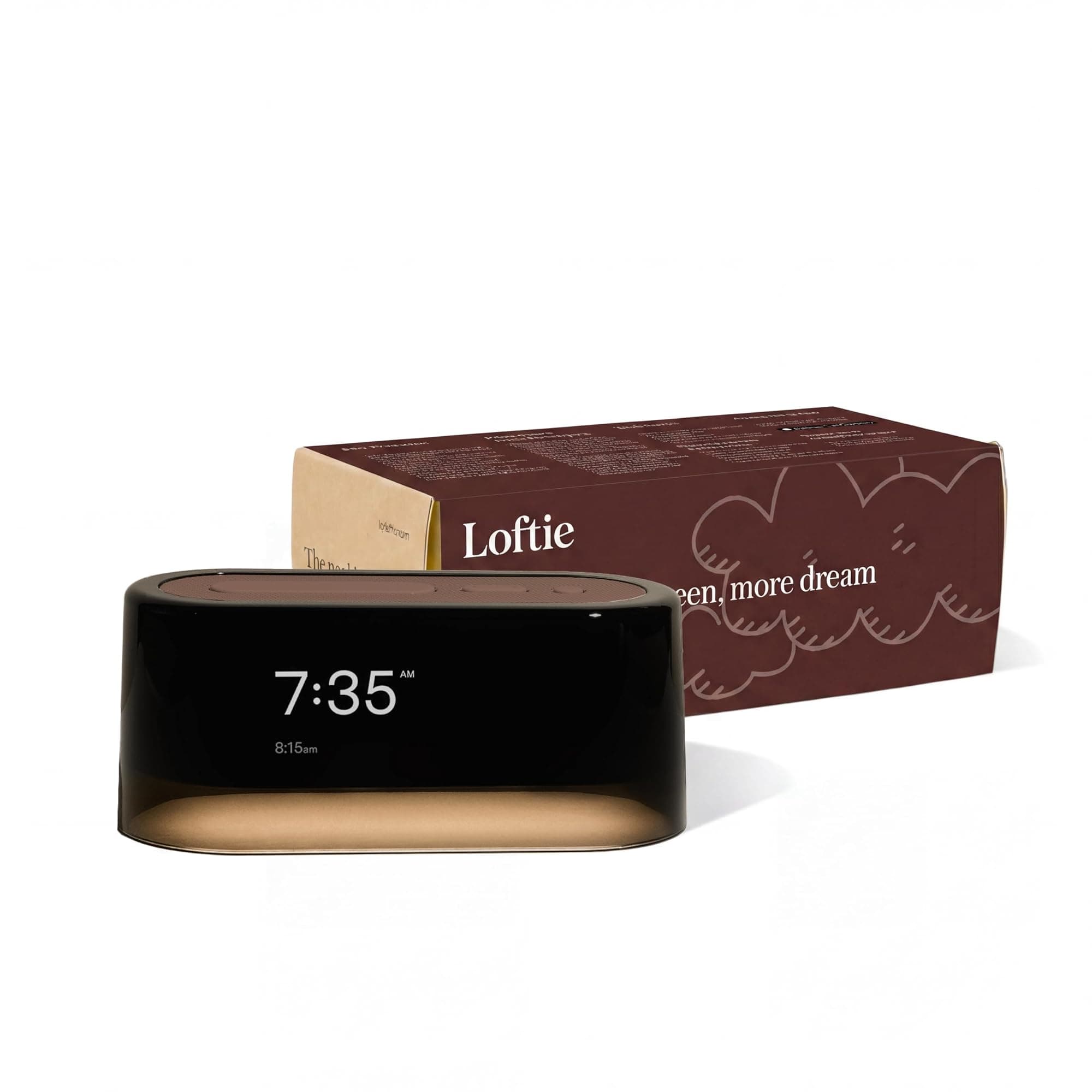
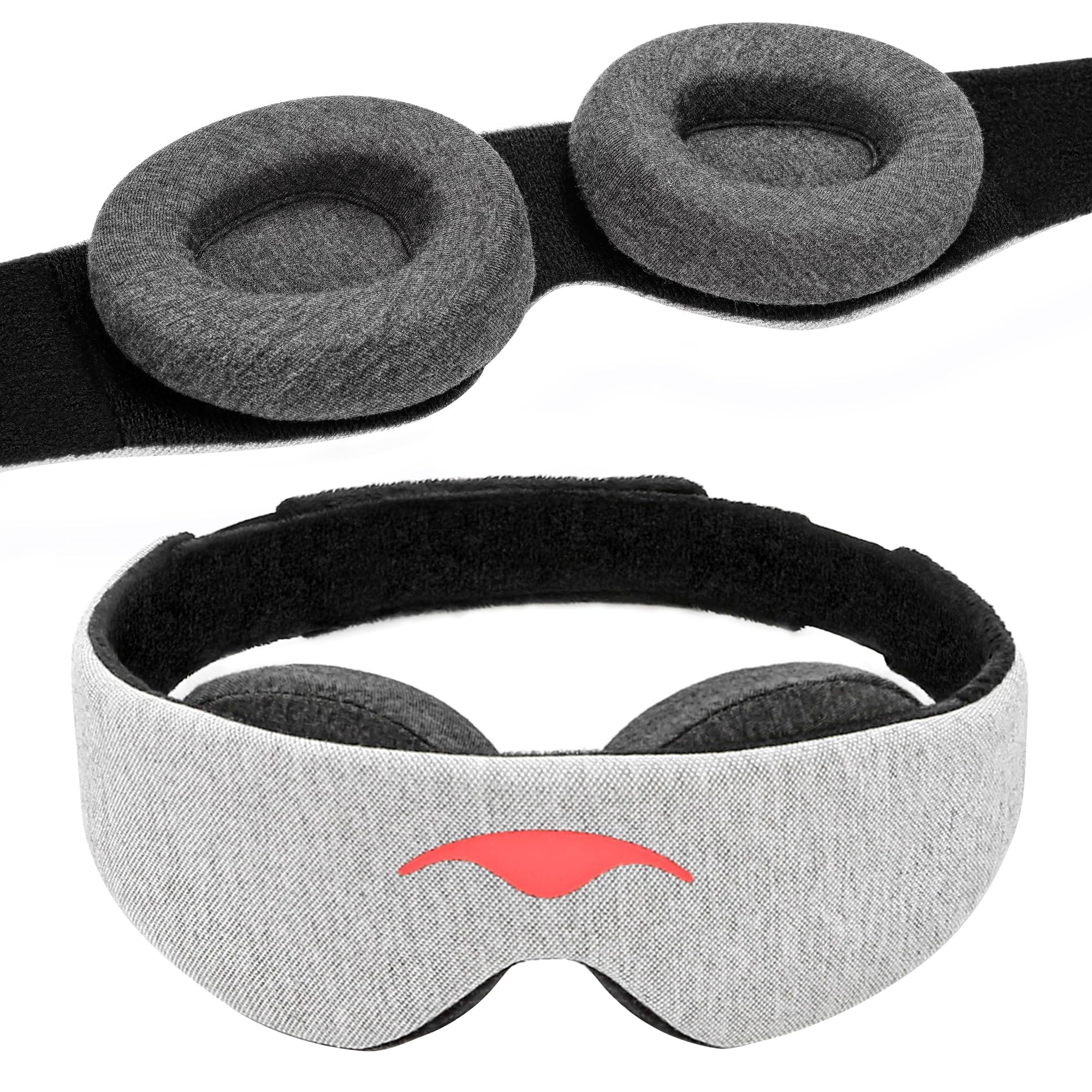
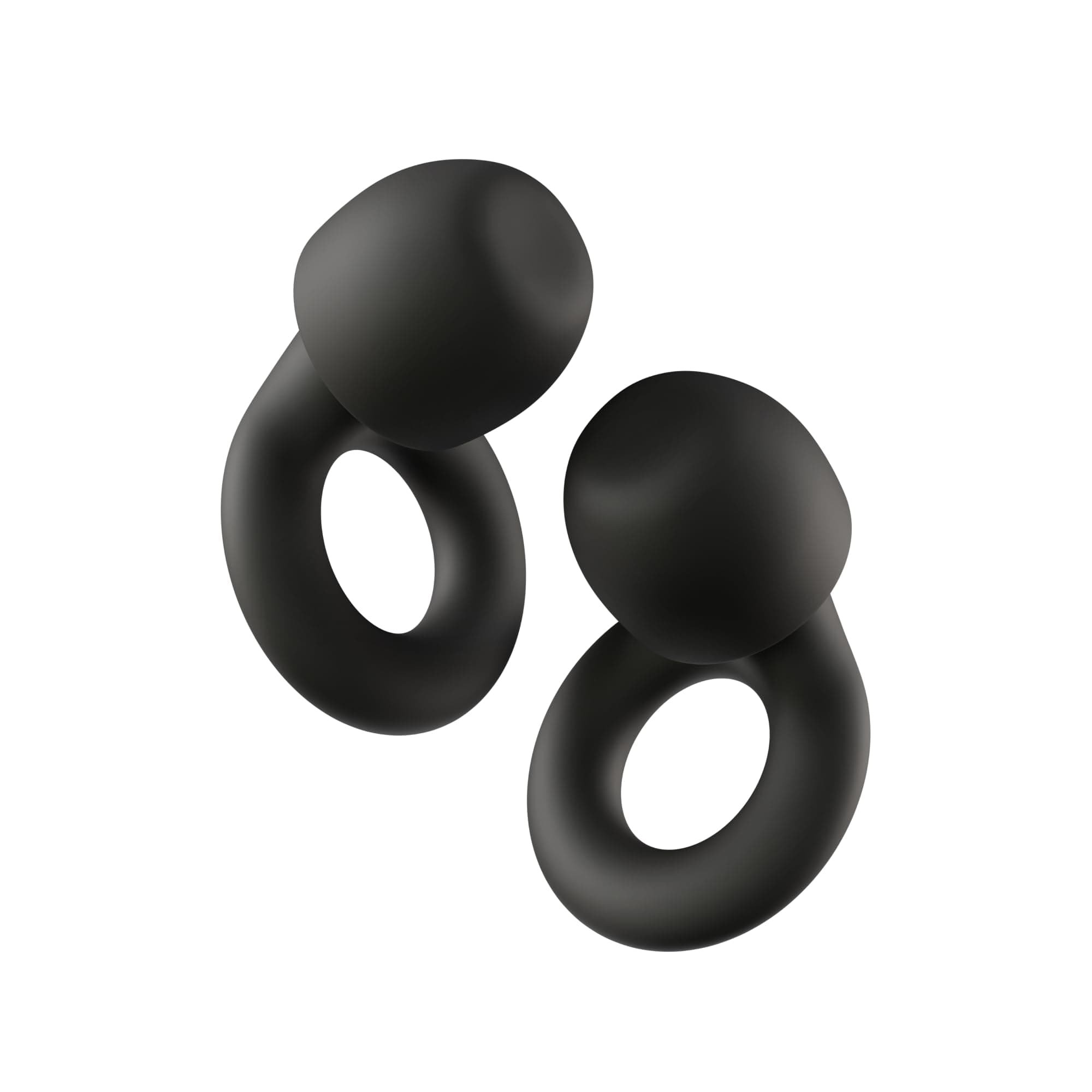
Affiliate disclosure: purchases via these links fund our work at no extra cost to you. Scores are independent of revenue.
Keep going
- ArticleWhy can't I fall asleep? Five causes.
Cognitive arousal is one of the five — meditation is the trial-validated fix.
- ArticleStress and sleep — breaking the cortisol loop
Meditation is one of the 5 trial-validated stress fixes.
- ArticleBreathing exercises for sleep
Quick technique to use mid-meditation if the mind keeps spinning.
- ArticleCalming bedtime routine
The 30-min routine that contains the meditation step at T-15.
- ArticleNatural sleep remedies, ranked by evidence
Magnesium + meditation is the gentlest combo for chronic insomnia.
- ArticleAromatherapy for sleep
Scent cue + body-scan technique — adds ~10% to the cue strength.